Is Your Neck Tired? Try a Warming Soup and a Supportive Pillow

Beige travel neck pillow beside a bowl of steaming soup on a wooden table
Warm soup in hand, neck at ease

Between phones, desks and long commutes, our necks work harder than we notice. Here are the early warning signs to watch for, a comforting herbal chicken soup to try, and a soft travel pillow that makes rest a little kinder to your neck.

01Warning Signs

7 Signs Your Neck Is Asking for a Break

The tricky thing about neck strain is that your neck itself may not hurt at all — the discomfort often shows up somewhere else. Aches and niggles with no obvious cause can quietly point back to your neck.

Years ago, my assistant told me her elderly father kept feeling dizzy — badly enough that he planned a special trip to Beijing for tests. Head scans had found nothing. I asked her to call home and describe his symptoms, then suggested one thing: check the neck. They did — and the answer was right there.

If you regularly notice any of these, and there's no other explanation, it may be worth paying your neck more attention:

  • Recurring headaches, dizziness or queasiness
  • Weak arms or tingling fingers
  • Blurry vision or eye strain
  • Feeling unsteady when you turn your head quickly
  • A brief electric jolt when you suddenly lower your head
  • Discomfort tilting the head back or turning side to side
  • Stiff neck muscles, tender spots, or a clicking sound when you rotate your neck
A gentle reminder: if several of these sound familiar, your neck may be telling you to slow down. If discomfort lingers, please talk to a qualified healthcare professional rather than pushing through.
02The Soup

A Warming Bowl: Chicken Soup with Gastrodia and Polygonatum

Caring for your neck isn't only about posture — it's also about what's on the table. This soup, with its two traditional root ingredients, has been a comforting family recipe for generations.

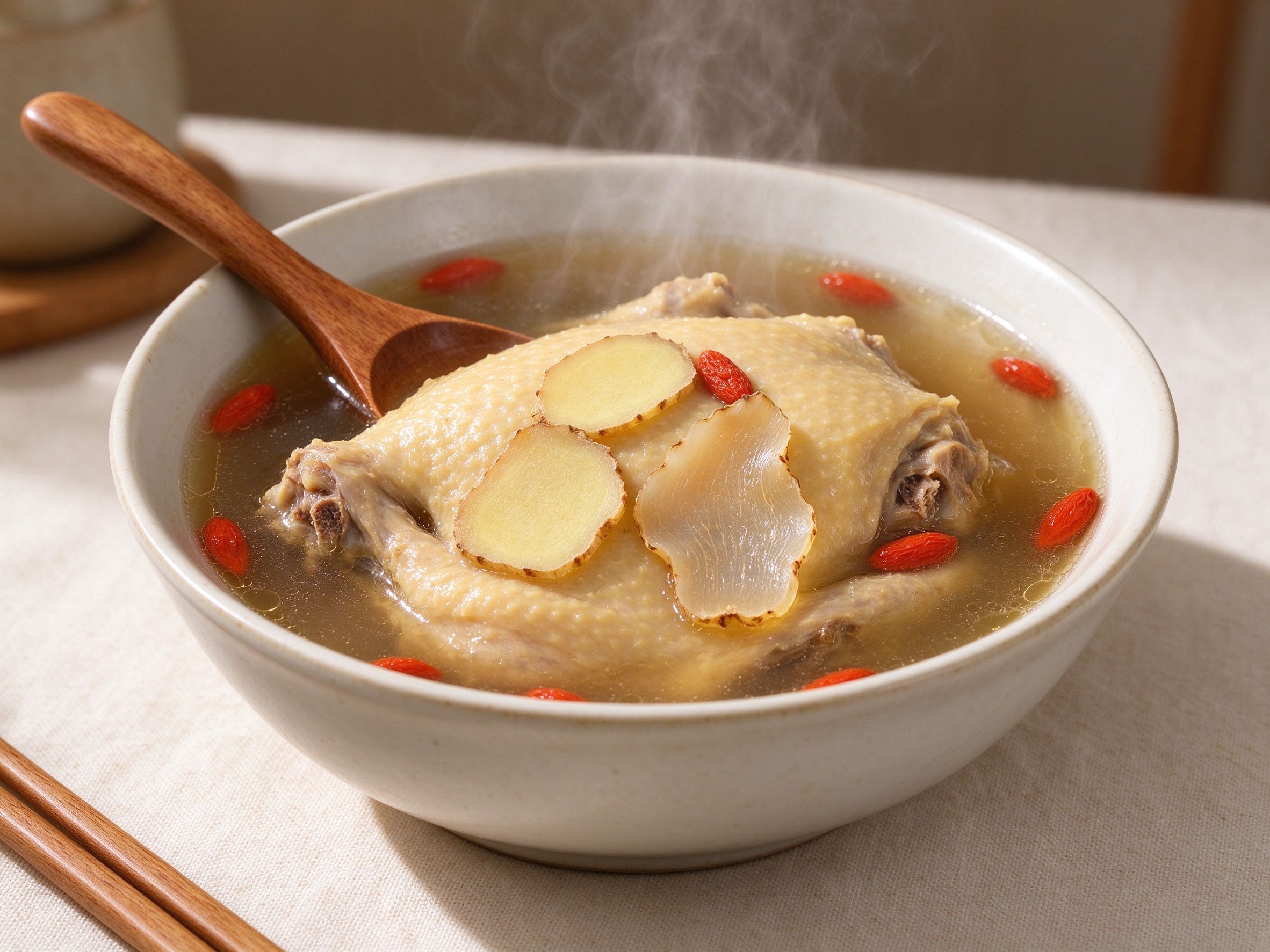
Bowl of homemade chicken soup with goji berries and ginger

Gastrodia & Polygonatum Chicken Soup

Easy to shop for, simple to make — one slow hour on the stove is all it takes

  • Fresh gastrodia (half a large one, or one small)
  • Nine-steamed polygonatum, 30 g
  • Goji berries, 20 g
  • White pepper, 6 g
  • Young ginger, 3 slices
  • 1 whole chicken
  1. Slice the gastrodia; add it with the polygonatum, ginger and the whole chicken into a pot.
  2. Simmer gently over low heat for about 1 hour, letting the broth slowly develop.
  3. Add the goji berries just before serving, sprinkle in the white pepper, and season with a little salt.

A home cook's note: the gastrodia slices turn soft and mellow, and the broth stays clear with a gentle warmth from ginger and white pepper. Adding the goji berries at the end keeps them plump and bright.
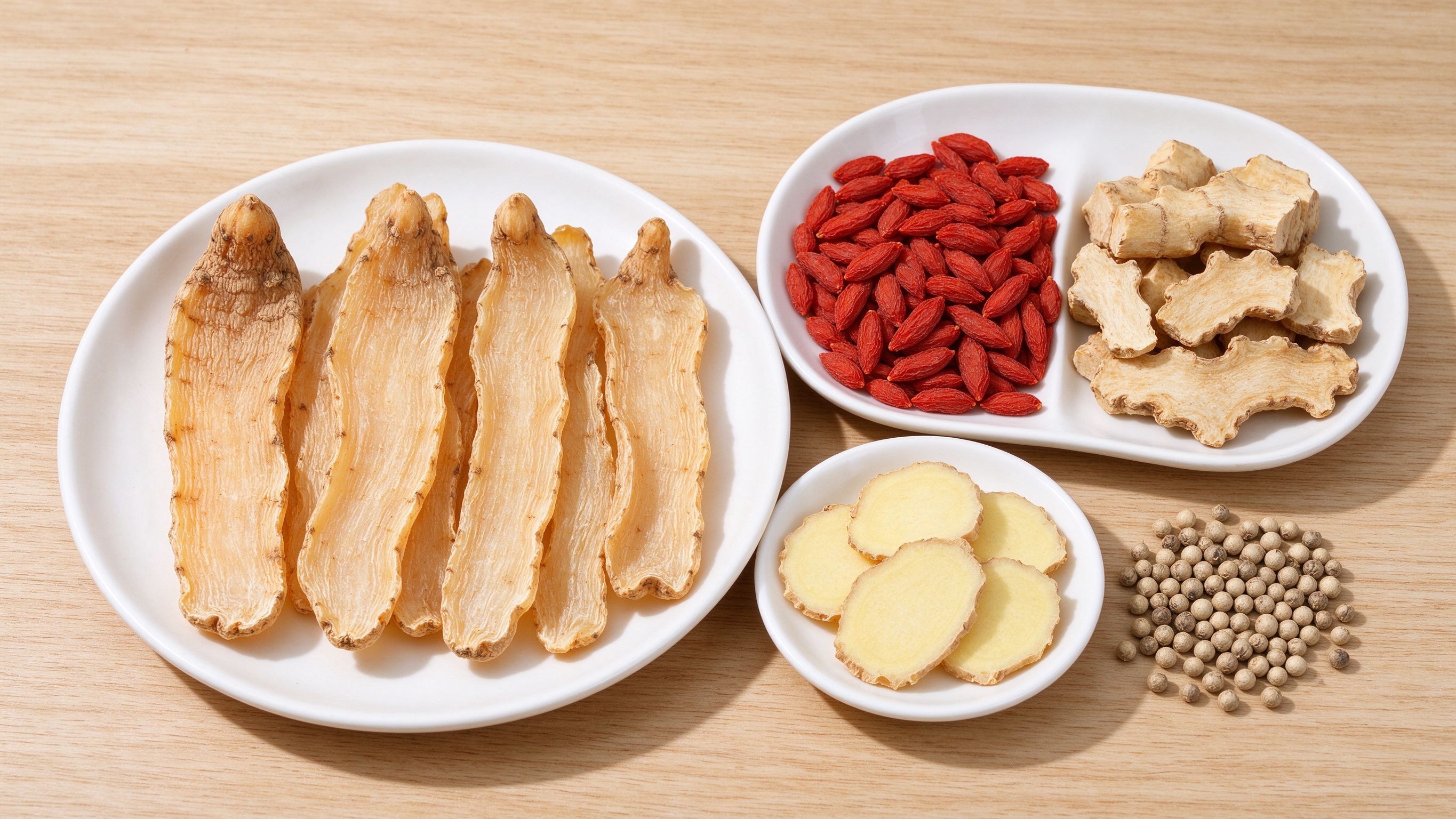

Gastrodia slices, polygonatum, goji berries, ginger and white pepper arranged on a wooden table
The ingredient lineup: gastrodia, polygonatum, goji, ginger and white pepper.
Bowl of homemade chicken soup with goji berries and ginger
The finished bowl: clear broth, soft chicken, a hint of warmth.
03My Story

A Glass Bottle, and What It Taught Me About Neck Support

“

The dizziness at 2 a.m. that started everything

More than a decade ago, I worked late into the night. When I stood up, I was hit by a wave of dizziness — my heart felt off too. The next day, a massage therapist worked on my neck and I instantly felt lighter. An X-ray later confirmed what we suspected: the natural curve of my neck had changed.

Back then, ready-made neck pillows barely existed, so I made my own: I wrapped an empty glass bottle in a towel and slept on it for 20 minutes every night before switching to my regular pillow. After about a month, my neck felt noticeably more comfortable, and so did I.

The lesson stuck with me: giving your neck a little support while it rests makes a real difference. But a glass bottle is hard and only works for short stretches — and it offers purely physical support, which doesn't help much when your neck is bothered by cold drafts or other everyday causes.

04Travel Pillow

From a U-Shaped Pillow to a Herbal Neck Pillow

After the bottle, I moved on to a classic U-shaped travel pillow. The regular ones felt a little thick and wide for lying down, though — until I scaled the shape down and curved it like a horseshoe to cup the neck. That felt right.

That idea grew into today's herbal neck pillow: the filling is a blend of dried herbs, which shift gradually to follow the curve of your neck. Unlike memory foam, which keeps one fixed shape, it moulds to you, spreading pressure more evenly across the neck. A soft herbal scent rises as you rest, making a short nap especially relaxing. The cover is pure cotton — soft, breathable and easy against the skin. And it's light, so you can toss it in a bag or simply wear it while walking around.

Beige cotton travel neck pillow with zip detail on linen
A U-shaped neck pillow with the right curve to cup your neck.
Professional woman napping at her desk wearing a beige neck pillow
Comfortable enough for a desk nap — and light enough to travel with.

When does it help most? These four moments cover a typical day:

  • 01Driving or riding

    Braking and speed bumps come with every journey; a pillow softens the jolts and keeps the ride calmer.

  • 02Flights, trains & long sits

    Hours in one position tire the neck; light support eases the strain.

  • 03Office & classroom naps

    Desk naps are awkward without support; a soft pillow lets you drift off with a hint of herbal calm.

  • 04Air-conditioned rooms

    Drafty air can chill your shoulders; a neck pillow shields the area when you're out and about.

When Your Neck Feels Good, Everything Feels Easier

An old saying promises "no worries with a high pillow" — but what truly helps is treating your neck well: look up from your phone, stretch between tasks, enjoy a warm bowl of soup, and give your neck a soft place to rest. Small habits, done consistently, are the quietest form of self-care.

Note: This article is a personal-experience and lifestyle feature. It is not medical advice. If you have ongoing discomfort, please consult a qualified healthcare professional.