The Double Ninth Festival: Chrysanthemum of Long Life

The Double Ninth Festival is the ninth day of the ninth lunar month — a day that Chinese people have celebrated for centuries. And at its heart is a flower: the chrysanthemum. Eighteen hundred years ago, an emperor sent his elderly tutor a bunch of chrysanthemums as a festival gift, together with a letter so well written that it has been remembered ever since. Let me tell you the story, and share a cup of chrysanthemum tea with you.

01The Emperor’s Letter

The Double Ninth Festival Gift: Chrysanthemums and a Famous Letter

The emperor was Cao Pi, son of Cao Cao and ruler of the Wei Kingdom. The tutor was Zhong Yao, thirty-six years his senior. Cao Pi’s note is known as the Letter to Zhong Yao on the Ninth Day of the Ninth Month — believed to be the earliest written record of Double Ninth celebrations.

In the letter he first explains why the day matters: the number nine is a “yang” number, and when both the day and the month carry it, people take it as an omen of long life and gather to feast. Then he turns to the flower:

“By this season, most plants have stopped growing — only the chrysanthemum blooms alone and fragrant. It must be nourished by the pure harmony of heaven and earth. … I send you this bunch, to help you tend your long life.” — Cao Pi, from the Letter to Zhong Yao (3rd century AD)
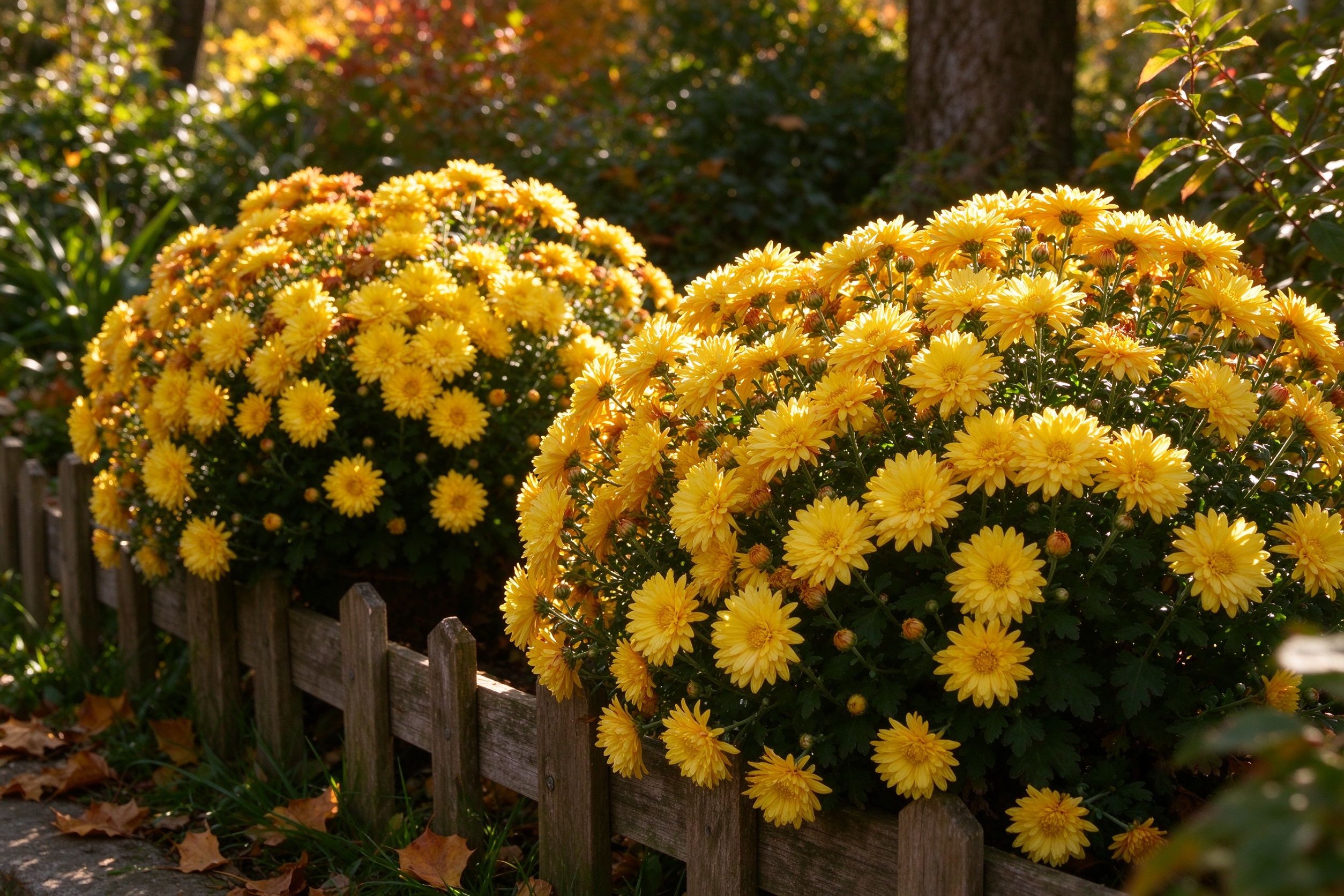
Golden chrysanthemums blooming in a fall garden beside a wooden fence
The flower of the Double Ninth Festival: chrysanthemums in full autumn bloom.
02The Writer & the Calligrapher

A Poet-Emperor and the Man Who Set the Standard Script

Everyone knows that Cao Pi’s younger brother Cao Zhi was a literary genius. But Cao Pi himself was no less gifted — he simply had the bad luck of becoming emperor, which overshadowed his fame as a writer.

The recipient, Zhong Yao, was just as remarkable: a senior statesman who served four rulers, and a calligrapher who defined the regular script (kaishu) still used in Chinese writing today. Even Wang Xizhi, the most celebrated calligrapher in history, studied Zhong Yao’s work.

So why did the emperor choose chrysanthemums? Because to the ancients, the chrysanthemum was the “flower of long life.” In Cao Pi’s words, it was “the most precious thing for tending the years.”

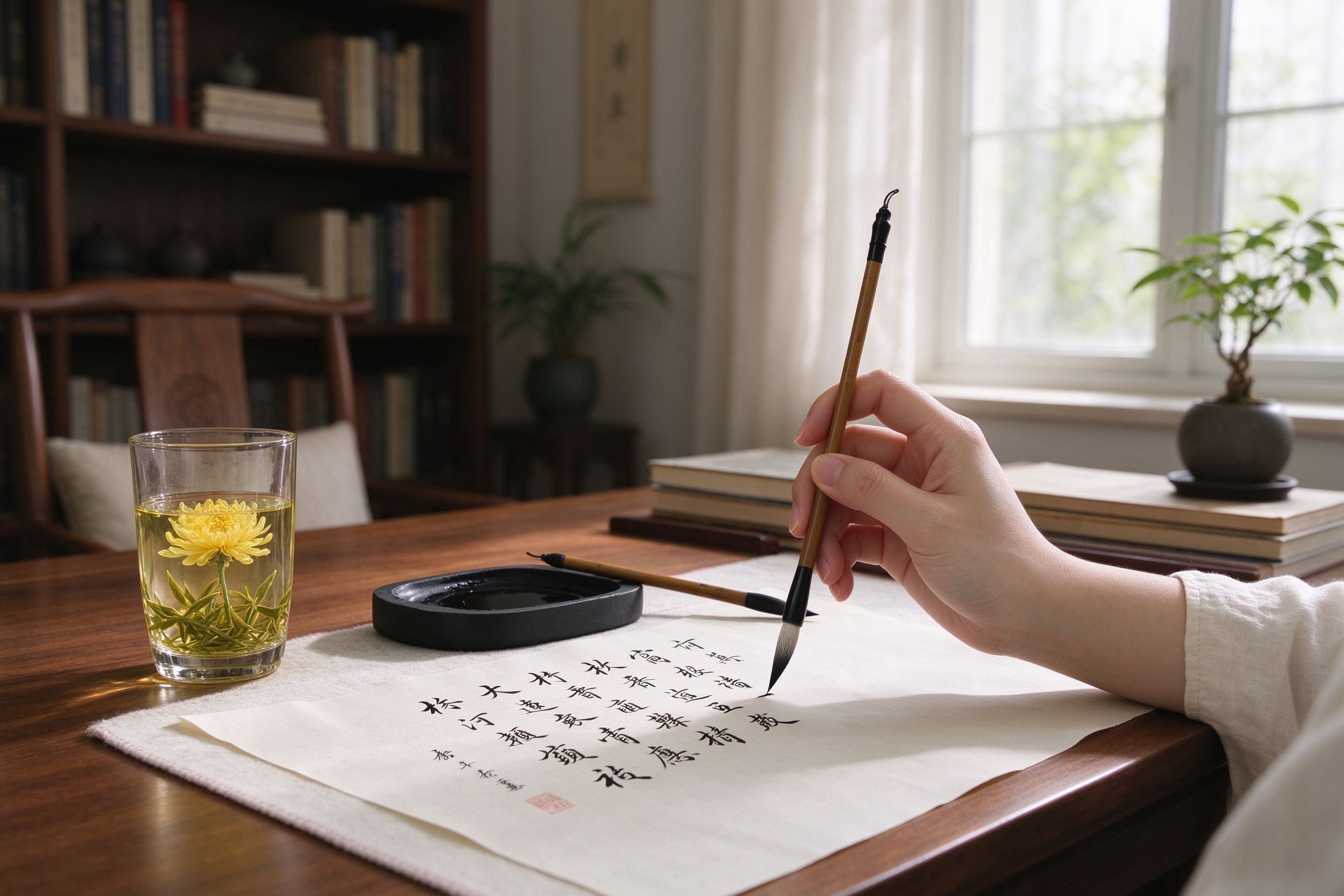
Brush calligraphy on rice paper beside a cup of chrysanthemum tea on a wooden desk
Letters and brushes: the Double Ninth Festival has always been a day of words and flowers.
03Two Old Names

“Guest of Longevity” and “Warder of Misfortune”

For the Double Ninth Festival, the old customs asked for two things: a pouch of dogwood berries and a cup of chrysanthemum wine. One red, one gold — together they framed the festival’s quiet wishes.

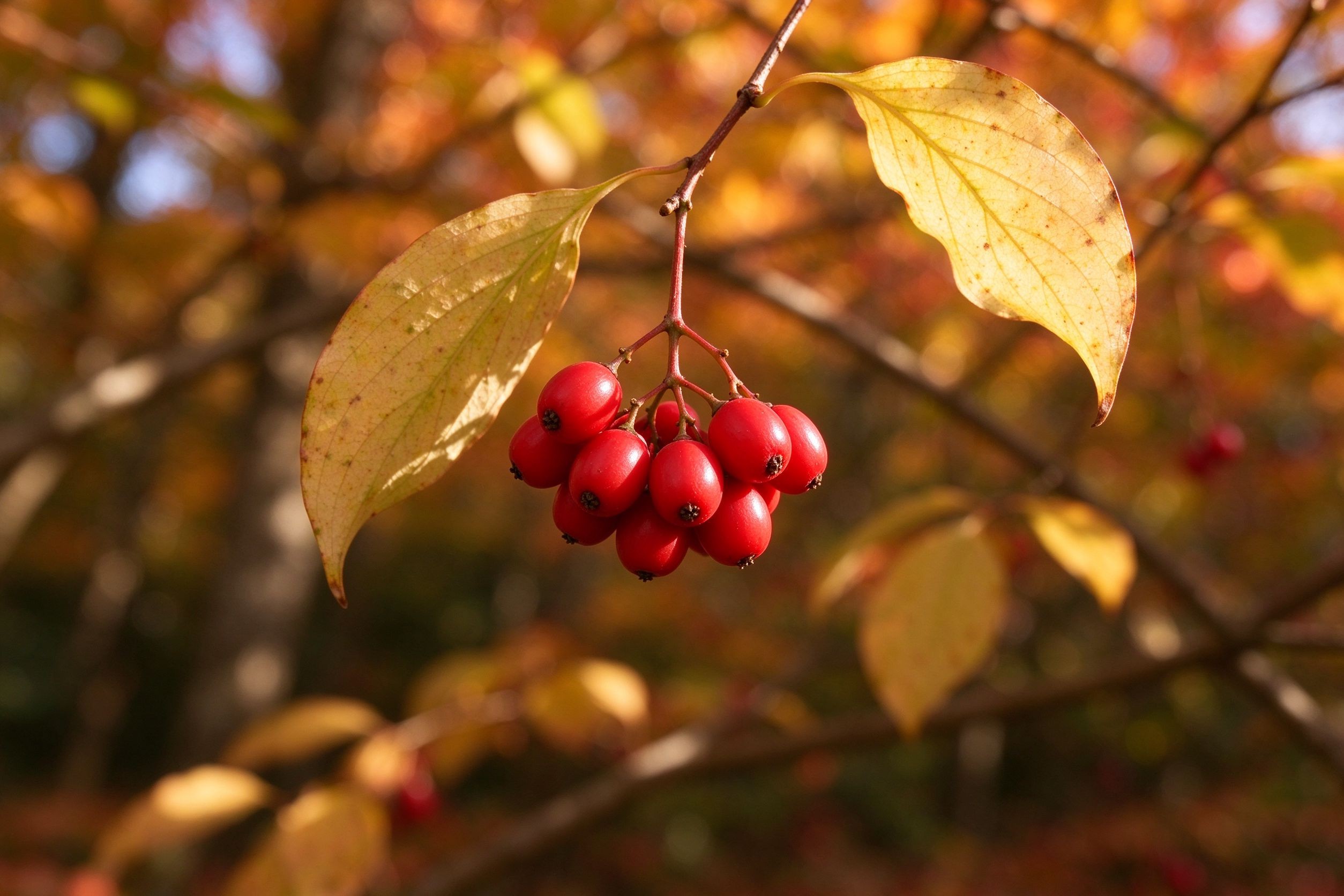
Dogwood carries small, brilliant red berries. The old tradition was to tuck a sprig in your hair or tie a cloth pouch of it around your arm — a simple, fragrant ritual that made the day feel protected and complete.

The ancients gave the two plants affectionate nicknames: dogwood was the “Warder of Misfortune”, and the chrysanthemum the “Guest of Longevity” — one to guard the household, one to bless the years.

Cluster of bright red dogwood berries on a branch in autumn light
Bright red dogwood berries — the “Warder of Misfortune” of the Double Ninth Festival.
04A Cup of Chrysanthemum Tea

A Home-Style Chrysanthemum Tea for the Festival

The ancients honored the chrysanthemum with grand rituals. In our everyday kitchens, the ritual becomes simpler: around the Double Ninth Festival, brew yourself a fragrant cup.

A traditional home blend is the four-herb tea: codonopsis, astragalus and licorice, rounded off with a small handful of chrysanthemum. The chrysanthemum brings a crisp, clean fragrance; the herbs add a faint, mellow sweetness. It is gentle and easy to sip on an autumn afternoon.

Four-Herb Chrysanthemum TeaOne pot · can be refilled
  • Codonopsis root 20 g
  • Astragalus slices 20 g
  • Licorice 9 g
  • Dried chrysanthemum 5 g
  1. Rinse the ingredients lightly and put them in a teapot.
  2. Pour in boiling water, cover and steep for 10 minutes.
  3. Pour a cup and sip while warm; refill once or twice more.
A home cook’s note: prefer a lighter cup? Use a little less of each herb. Love the floral note? Add another pinch of chrysanthemum. Treat it as an everyday tea — the point is the quiet, unhurried ritual, not the quantity.
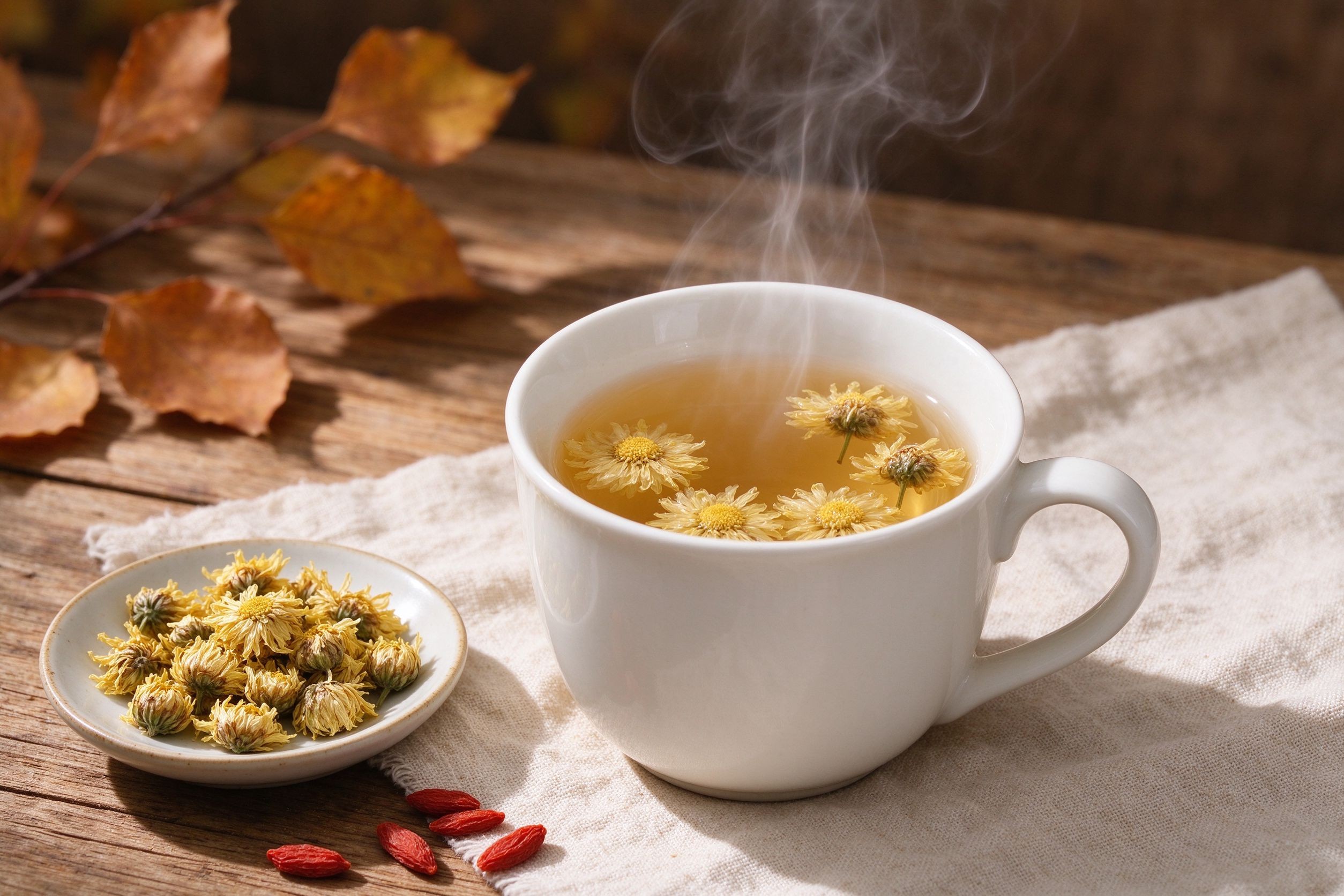
White ceramic mug of chrysanthemum tea on a linen tablecloth with dried flowers nearby
A cup of chrysanthemum tea — the festival’s warmest everyday ritual.
05Small Autumn Rituals

Climb a Hill, Admire the Flowers, Slow the Season Down

The other great custom of the Double Ninth Festival is climbing high. The autumn sky is clear, the air is crisp — gather family and friends, walk into the countryside, and enjoy the chrysanthemums in full bloom.

That love for the flower lives on in art, too. The great painter Qi Baishi, at the age of ninety-one, still painted a picture of chrysanthemums with a cup of wine — even in his tenth decade, the golden flower of autumn stayed on his mind.

Climb a hill, admire the blooms, brew a cup of chrysanthemum tea, and spend time with the people you love. Slowing the season down — that is the simplest, sweetest way to keep the Double Ninth Festival.
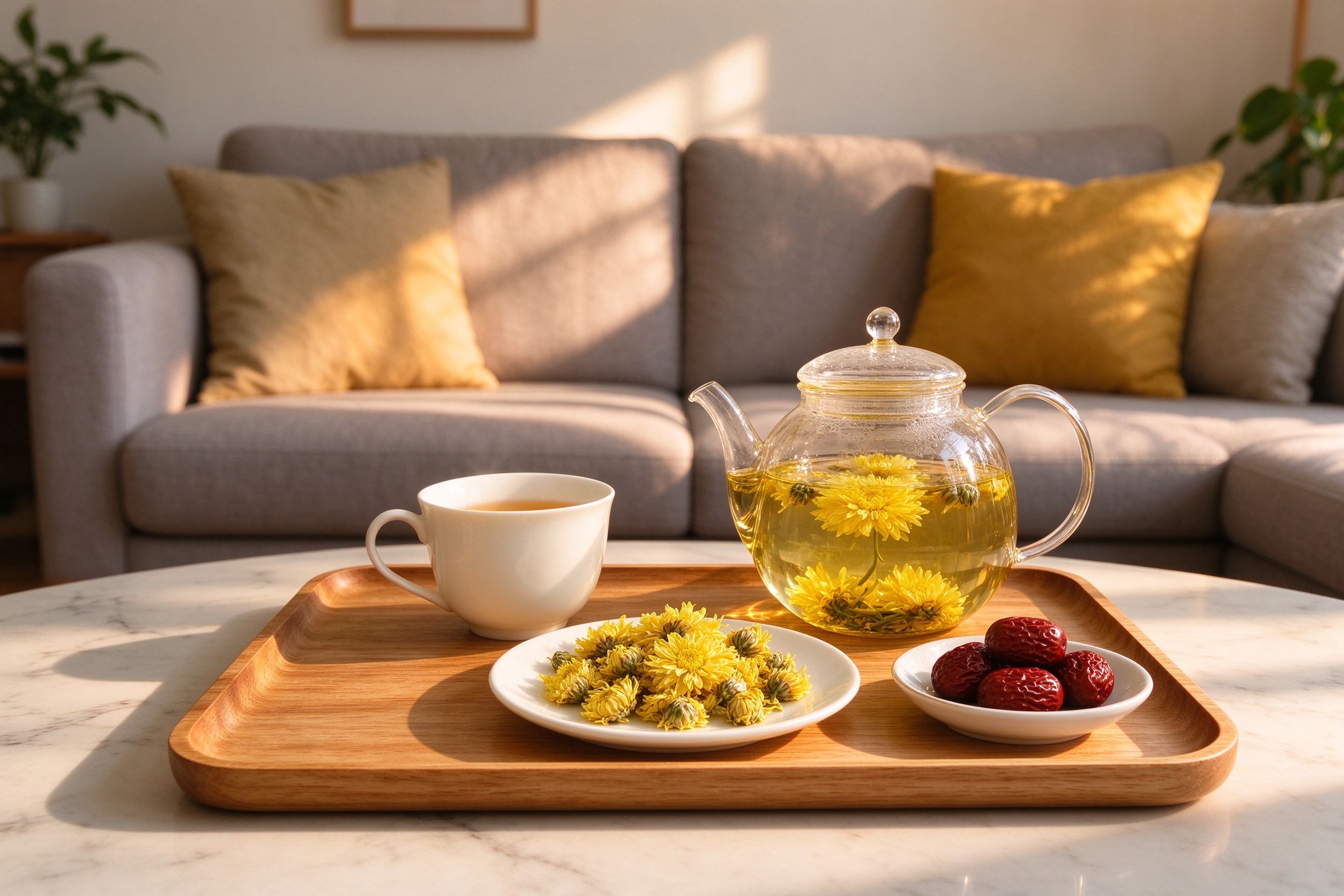
Cozy autumn tea setting with a glass teapot of chrysanthemum tea, a white cup and dried flowers on a wooden tray
A small tea ritual: chrysanthemums, warmth, and a slower afternoon.
Nine is a number of long life; nine on nine makes the day auspicious for years to come. The ancients turned the Double Ninth Festival into a blessing for longevity — may that blessing find its way into your autumn. — Double Ninth Festival, ninth day of the ninth lunar month
Note: This article shares traditional culture and everyday food customs. Beliefs about chrysanthemum and dogwood are ancient folklore, and the tea recipe is for reference only — it is not medical advice. Please consult a doctor for any health concerns.