A folk custom with a thousand-year history, captured in one of China’s most famous poems. Here is the story of zhuyu — and how to make a festival sachet yourself.
I doubly yearn for kin on every festive day.
From afar I know my brothers climb the heights,
And one place is bare — the zhuyu they wear.
Why Does Zhuyu Belong to the Double Ninth Festival?
“Alone, a lonely guest in a strange land, I doubly yearn for kin on every festive day.” Nearly every Chinese student can recite Wang Wei’s poem. But have you ever wondered: on the ninth day of the ninth lunar month, why did people climb the heights wearing zhuyu — and not some other herb?
The answer lives in folk custom. Zhuyu was the festival’s essential token, and the ancients gave it a vivid nickname — “Bi Xie Weng”, the old one who drives away the unlucky. At the Dragon Boat Festival, households prepared mugwort; at the Double Ninth Festival, they prepared zhuyu. One in summer, one in autumn, the two customs echo each other across the year.
Dragon BoatMugwort
As summer heat and dampness arrived, people hung mugwort and wore sachets to repel pests and pray for peace.
Double NinthZhuyu
As the weather turned cool, people wore zhuyu on their heads and arms to ward off misfortune and bless their families.
To the ancients, zhuyu carried a strong, spicy aroma. Worn on the body or kept at home, it stood for pushing away bad qi and inviting safety and long life. Every Double Ninth, people tucked a sprig into their hair or tied a small pouch to their arm — the scent was their reassurance, and the habit became one of the festival’s most recognizable sights.
Three Kinds of Zhuyu, Three Very Different Roles
“Zhuyu” is actually a family name shared by three common plants with completely different personalities. Tap each tab to meet them.
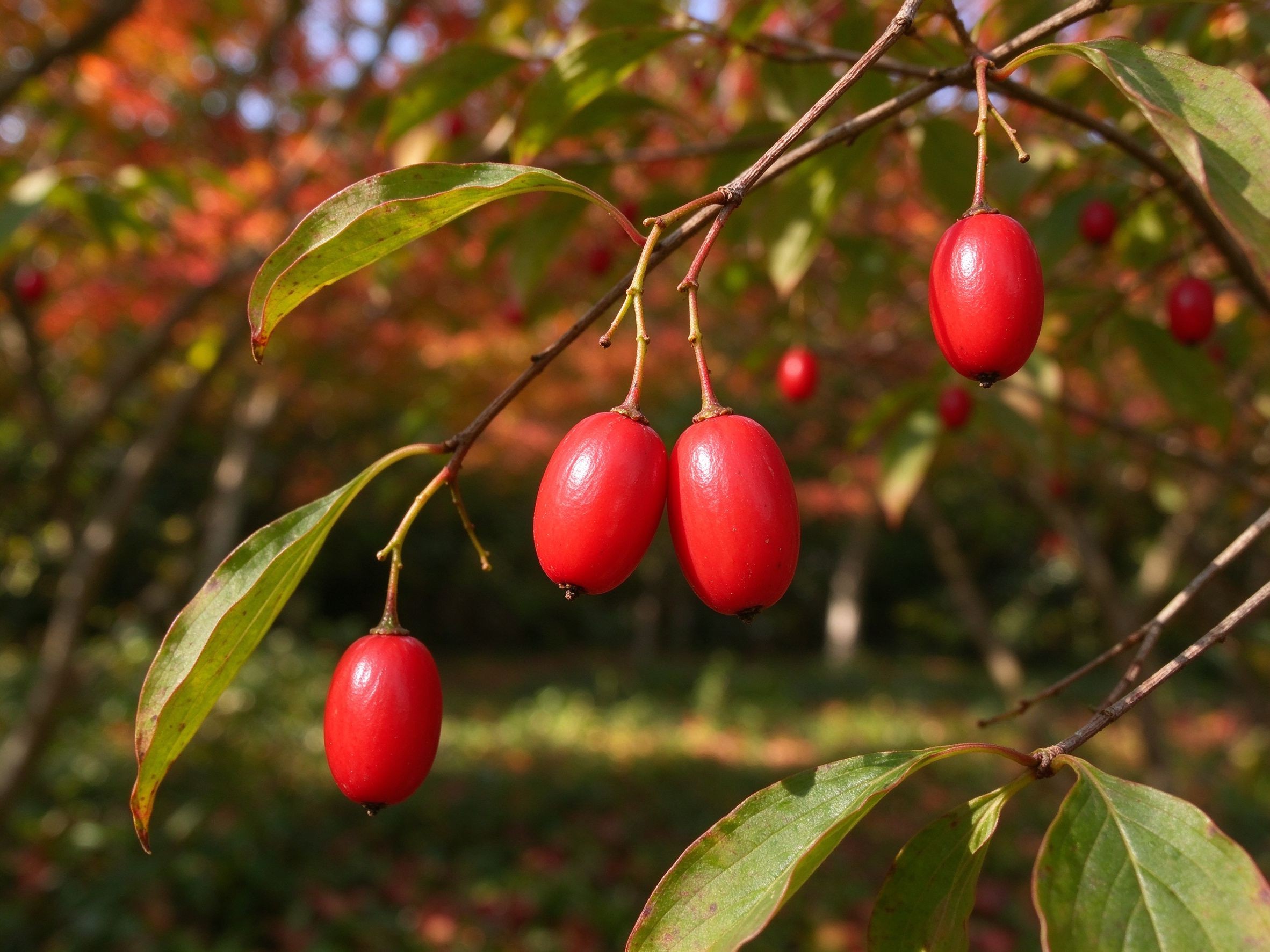
Shan Zhu YuCornus officinalis
Shan zhu yu is a traditional tonic herb in Chinese herbalism, traditionally associated with “replenishing what leaks” — night-time urination, sweating, and similar conditions appear in classical texts. In autumn, its glossy red berries turn whole hillsides into a harvest of colour.
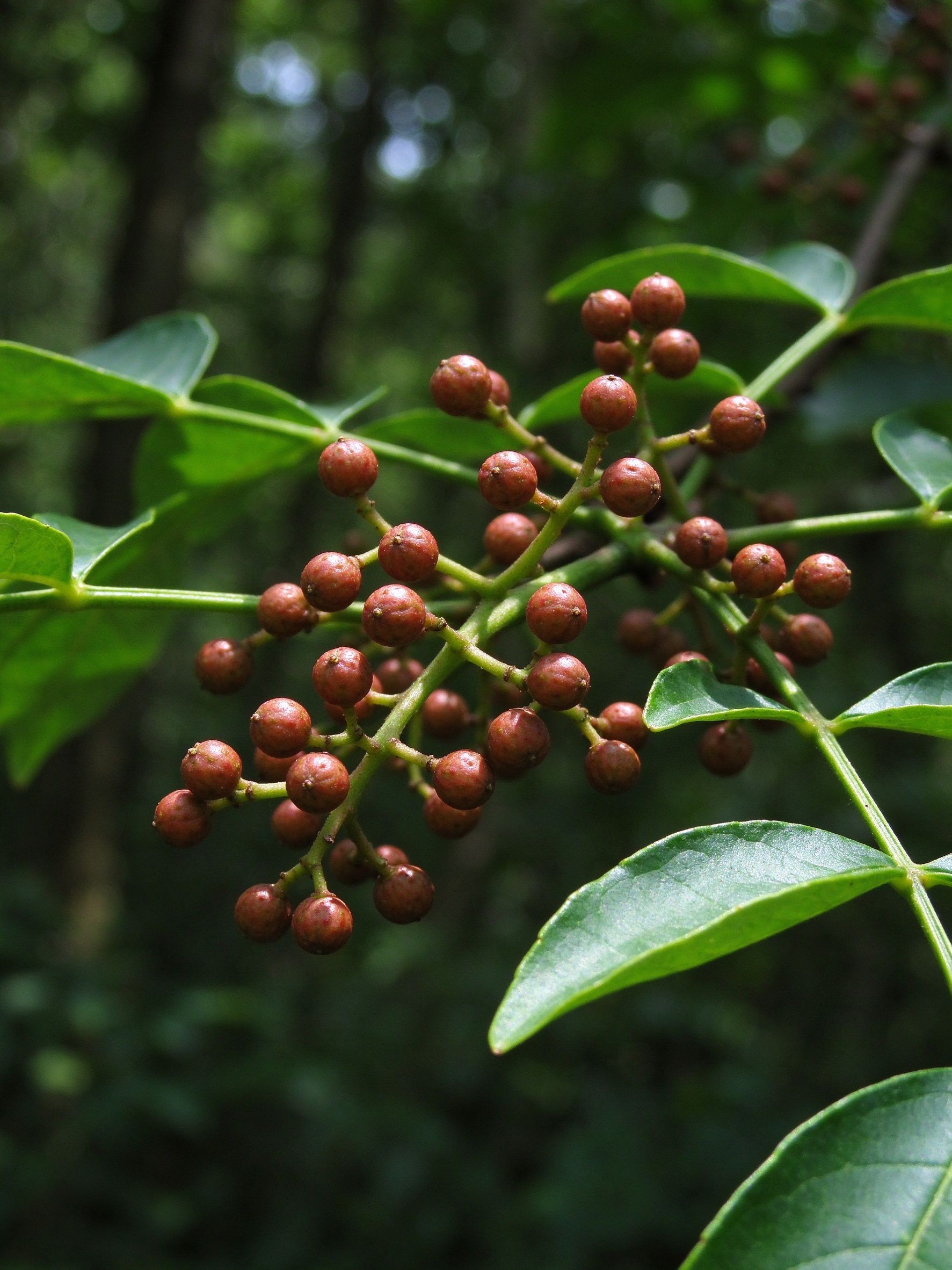
Shi Zhu YuZanthoxylum ailanthoides
Shi zhu yu was the ancient kitchen’s “pepper.” A member of the prickly-ash family, it added a spicy, aromatic kick to food — much like the Sichuan pepper we use today. The “shi” in its name literally means “food.”
Wu Zhu YuEvodia rutaecarpa
Wu zhu yu is a tree common in southern China, flowering in summer and fruiting in autumn. The best quality traditionally came from the Wu region (around modern Jiangsu and Zhejiang), which is how it earned its name. With its bold, spicy scent, it is the zhuyu of Wang Wei’s poem — and the true star of the festival.
| Type | Role | Character | Best-known story |
|---|---|---|---|
| Shan zhu yu | Traditional herb | Glossy red berries; tonic in herbal texts | “Filling what leaks” in classical medicine |
| Shi zhu yu | Seasoning | Spicy and aromatic; prickly-ash family | The ancient kitchen’s pepper |
| Wu zhu yu | Festival star | Bold spicy scent; summer bloom, autumn fruit | The zhuyu worn in Wang Wei’s poem |
The Poem That Made Zhuyu Famous
In the ninth century, the poet Wang Wei was far from home on the Double Ninth Festival. His four lines turned a small branch of zhuyu into a symbol of longing that has lasted more than a thousand years.
The custom behind the verse: on this day, families climbed high places together and wore zhuyu — on the head, or tucked into a cloth pouch tied to the arm. Wang Wei, alone in a strange land, imagines his brothers on the mountain, and grieves that “one place is bare” — his own. Because zhuyu was so central to the day, the Double Ninth Festival was even nicknamed the “Zhuyu Festival.”
There was also a practical side. Mountain air grows cold in late autumn, and hikers valued the warming, spicy scent of zhuyu carried in a pouch — a small comfort on a long climb, and a reason the custom felt natural to keep.
Make Your Own Zhuyu Festival Sachet
The ingredients are easy to find at any Chinese herbal shop, and the whole project takes about ten minutes. It makes a lovely seasonal ritual — or a thoughtful gift.
What you need
Adjust the amounts freely — this is a craft, not a prescription.
-
Gather
3–6 g of wu zhuyu (dried, from an herbal shop), a small handful of litsea cubeba berries, and a small handful of dried chrysanthemum.
-
Mix
Combine all three ingredients in a bowl and stir until evenly blended.
-
Fill
Spoon the blend into a small cloth sachet and close the drawstring tightly.
-
Wear
Around the festival, wear it at your chest or wrist while hiking or travelling — a fragrant nod to a thousand-year tradition.
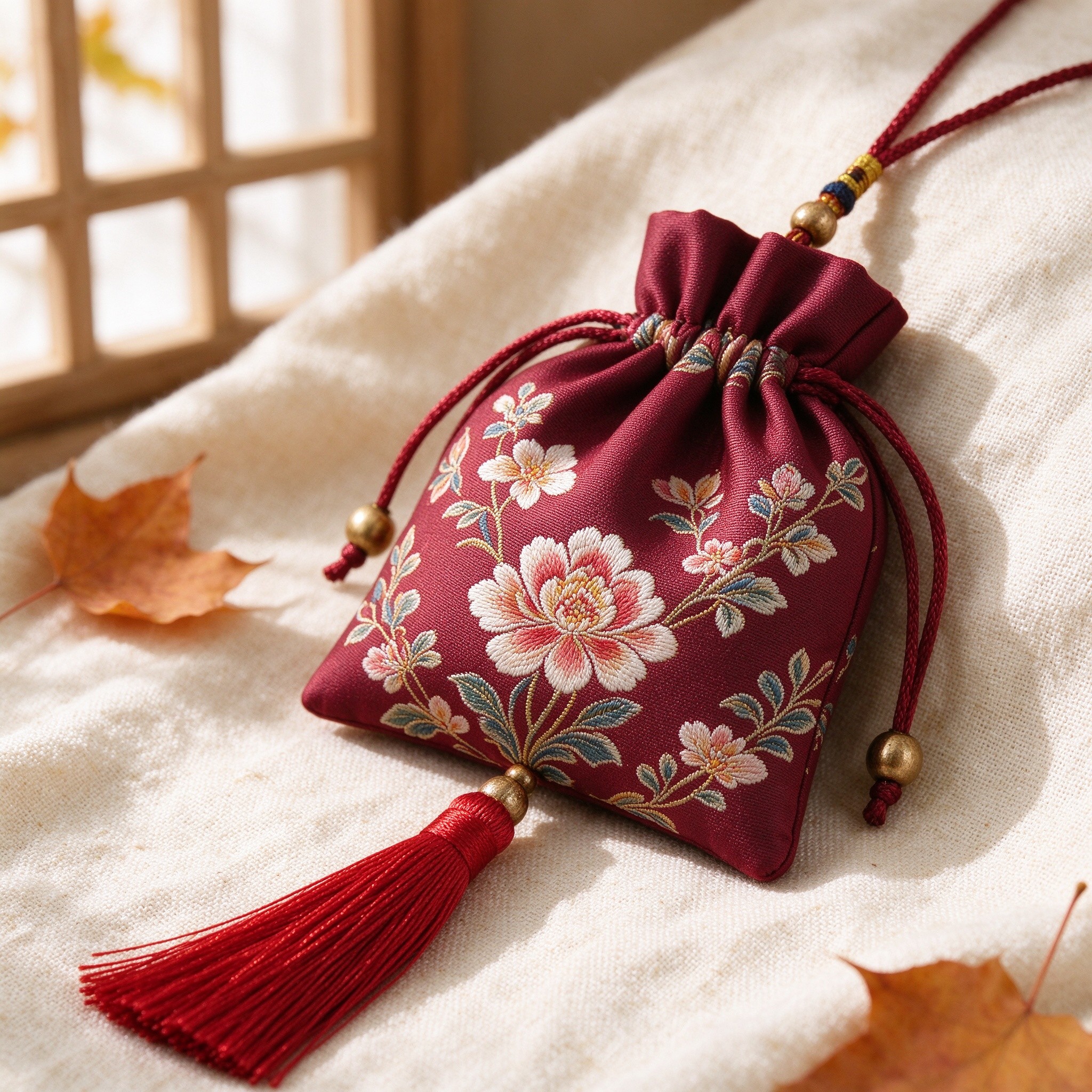
A Royal Brocade Quilt from Two Thousand Years Ago
Zhuyu was more than a village custom. A national treasure excavated in Xinjiang — a brocade quilt woven with the inscription “May the princes wed, and their descendants thrive for ten thousand years” — is believed to have been made for the wedding of the king and queen of the ancient Jingjue kingdom.
And there, woven into the fabric, is the zhuyu motif. Two thousand years ago, royal families embroidered zhuyu into a wedding quilt, hoping to ward off misfortune and bless their lineage. A small berry — with a surprisingly heavy presence in Chinese culture.
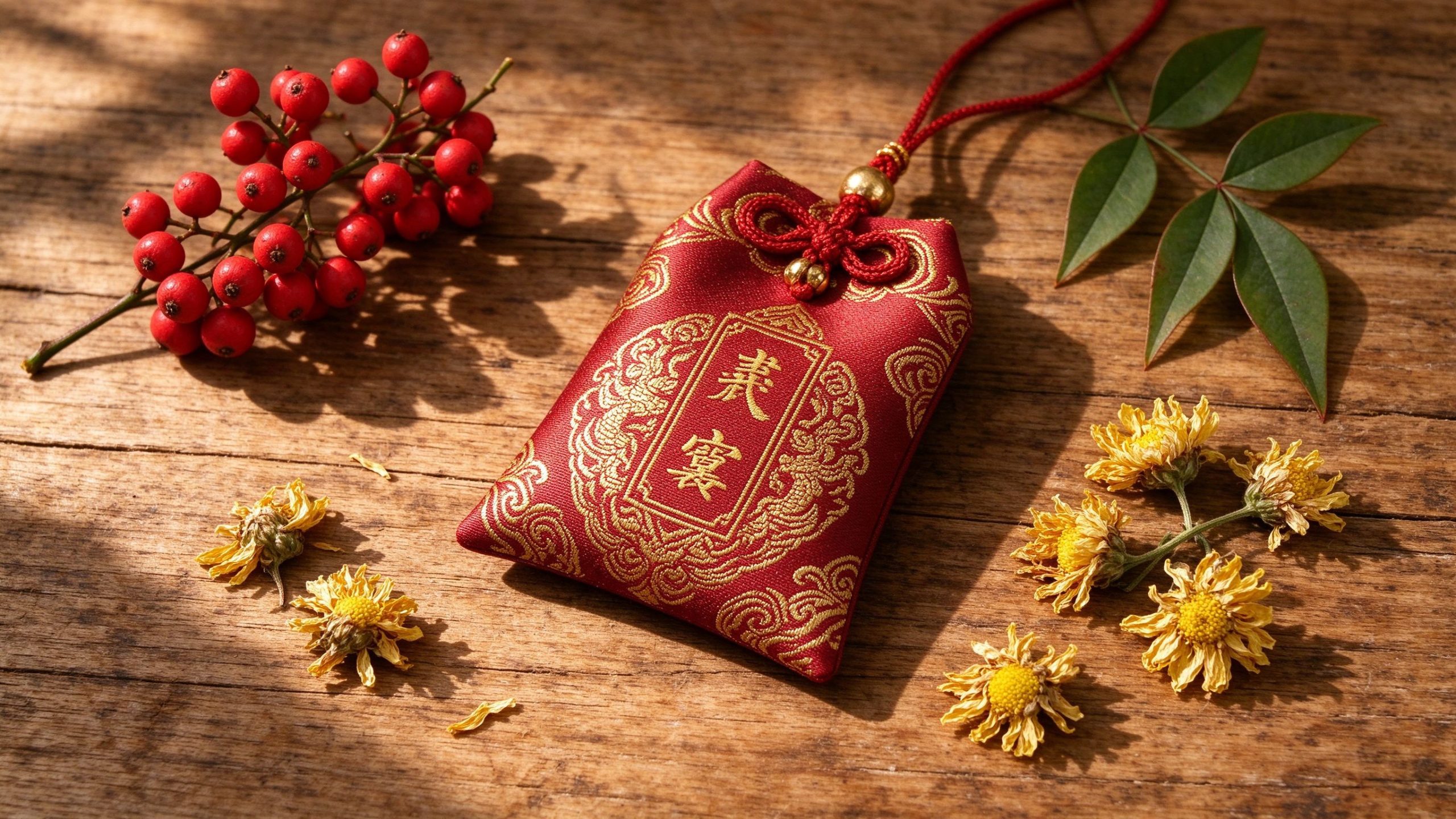
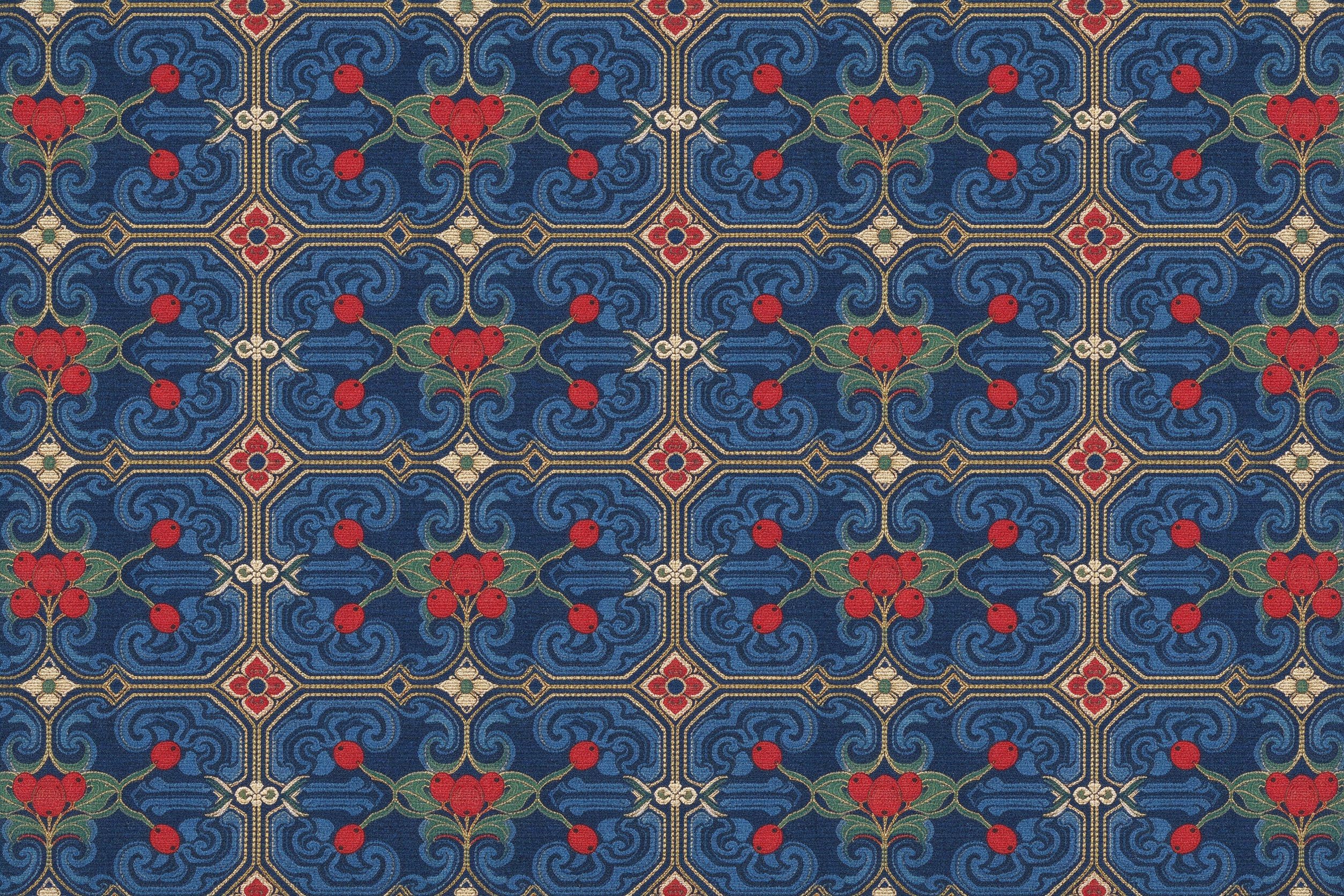
A Small Berry with a Thousand-Year Story
From a Tang-dynasty poem to a handmade sachet, zhuyu carries the warmth of the Double Ninth Festival across the centuries. Climb high, wear a sprig of custom, and remember — sometimes the smallest traditions hold the deepest meaning.