Frost’s Descent is the last solar term of autumn — the quiet signal that winter is on its way. Around the same days, chrysanthemums reach their full glory, and the old folk recipes of the season often begin with a small handful of this golden flower. Today, two small things: how to ease through this turning point of the year, and a simple four-ingredient chrysanthemum tea.
The Last Days of Autumn: A Season of “Nurture and Steady”
Frost’s Descent marks the shift from autumn to winter — a change you can feel in the morning air. The old saying goes: build up your reserves before winter arrives, then ease into the cold season. So these days are about two words: nurture and steady.
Move during the day, sleep a little earlier at night, and keep a warm pot of something gentle brewing. If autumn ends well, winter feels easier.
The “Flower of Long Life” Blooms at Autumn’s End
Around this time falls the Double Ninth Festival — and with it, the season of the chrysanthemum: the flower people harvest, cook with, and brew.
To the ancients, the chrysanthemum was the “flower of long life.” A wellness almanac notes the old belief that yellow chrysanthemum keeps the complexion fresh and bright — a lovely thought from the past, and a good reason to brew a cup.
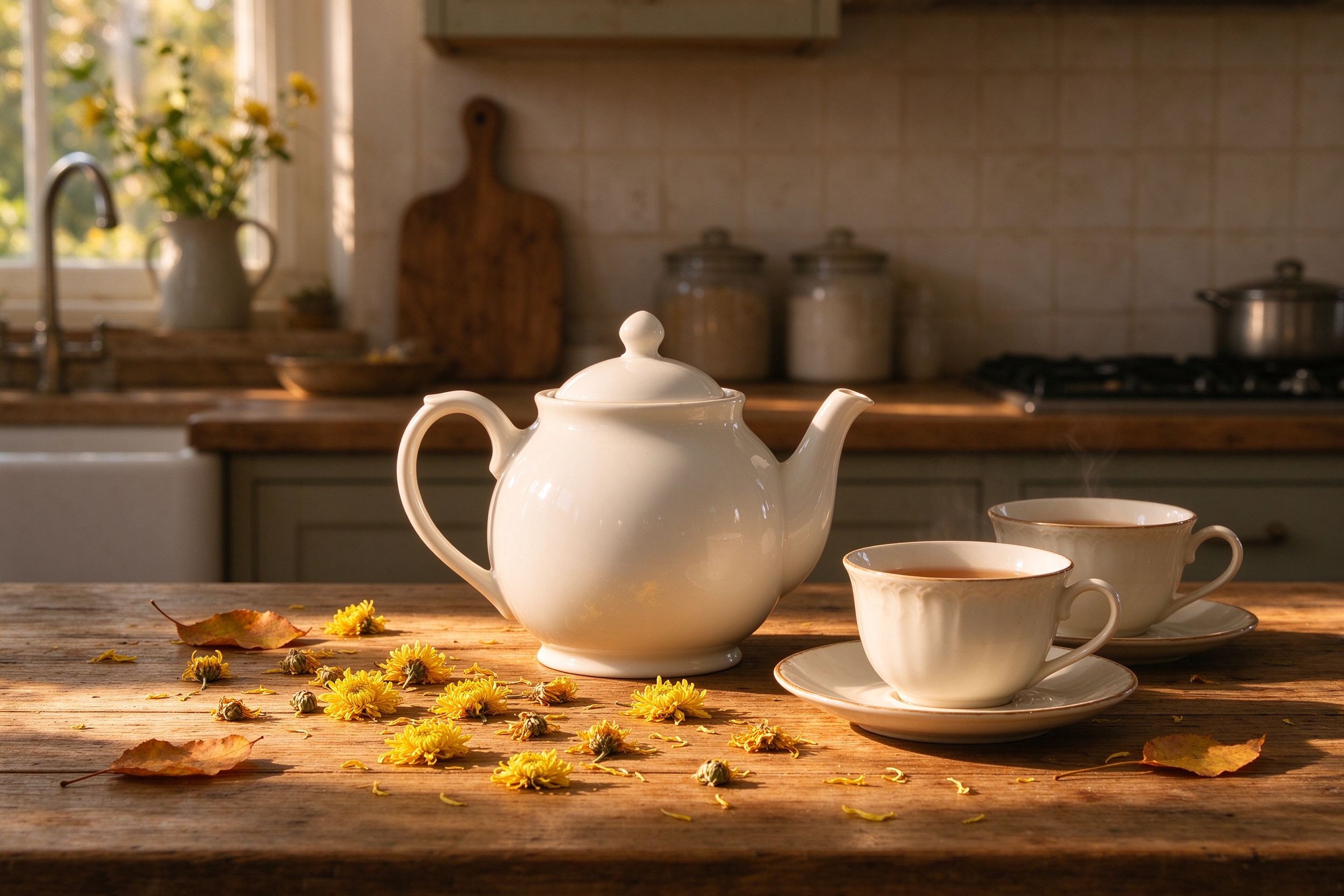
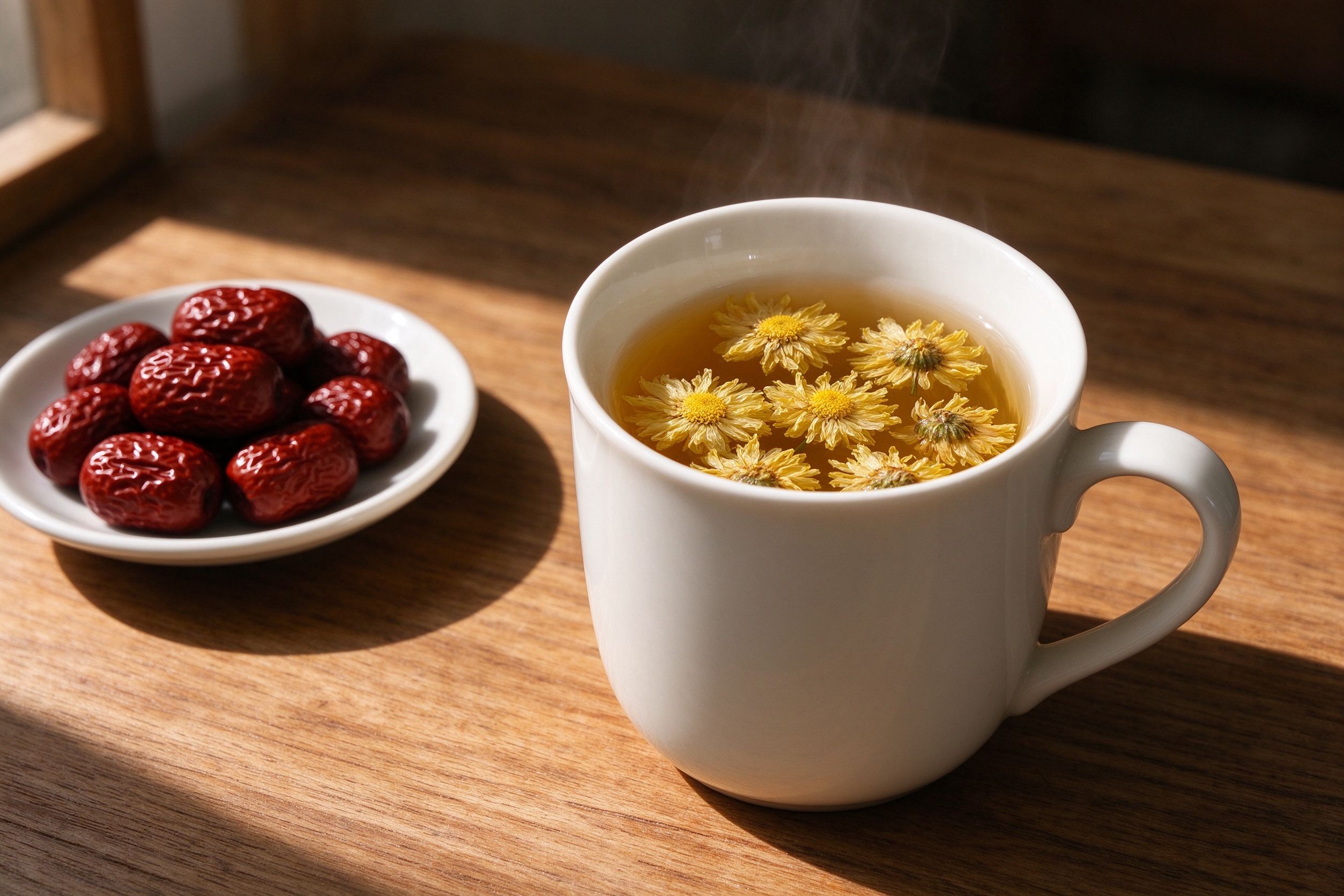
The same almanac adds that this autumn tends to run dry in the air. A clean, fragrant cup of chrysanthemum tea is one of the most comfortable ways to enjoy the season.

Four Ingredients, a Pinch of Chrysanthemum, One Pot of Autumn
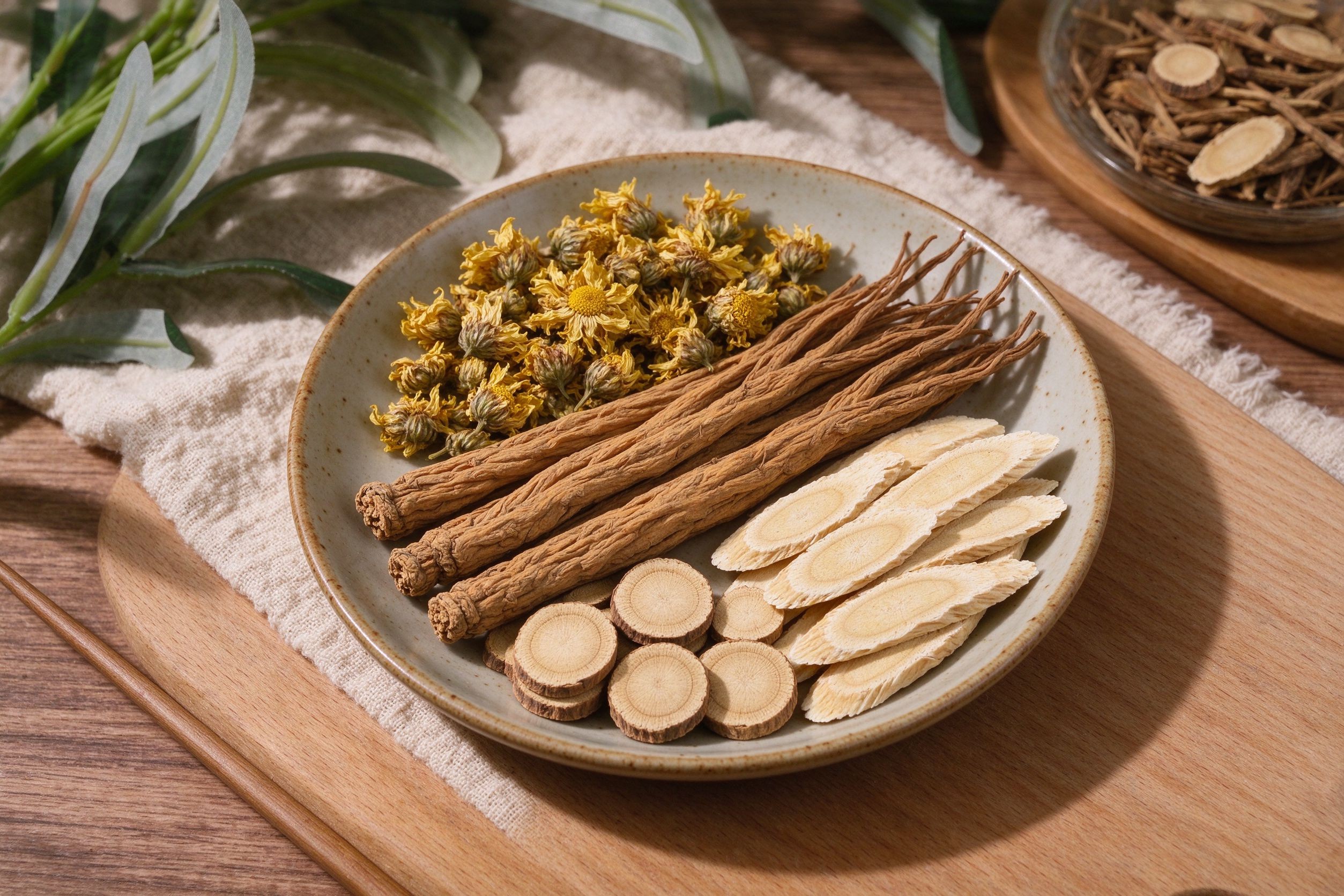
A traditional home blend pairs codonopsis, astragalus and licorice with a small handful of dried chrysanthemum. The ingredients are easy to find, and the method is wonderfully simple.
- Codonopsis root 12 g
- Astragalus slices 12 g
- Licorice 3 g
- Dried chrysanthemum 2 g
- Rinse the ingredients lightly and put them in a teapot.
- Pour in boiling water and steep, or simmer gently in a pot.
- Sip while warm; refill once or twice more.
The Ancient Praise for Chrysanthemum, in Their Own Words
The other three ingredients each bring their own character to the cup:
Codonopsis is a slender root that steeps to a faint sweetness; astragalus slices are pale gold and lend a gentle, nutty note; licorice is where the tea’s mellow sweetness comes from, smoothing everything together. Three quiet characters and one bright flower — a clean, gentle cup.
No Checklist Needed — Anytime You Want a Warm Cup
The old recipes often mention a few familiar cases: people with long days of work and study, anyone who spends hours on screens — long hours of screen time do tire the eyes — and older family members who enjoy a warm cup in the afternoon.
But there is really no checklist. On an autumn afternoon, when you feel like a warm cup, this is simply a pleasant everyday tea — light, mellow, and easy to share.