Family Wellness · Everyday Food
Get to know your body’s daily rhythm, and explore simple kitchen-cupboard soups, teas and congee — gentle habits you can build into every meal.
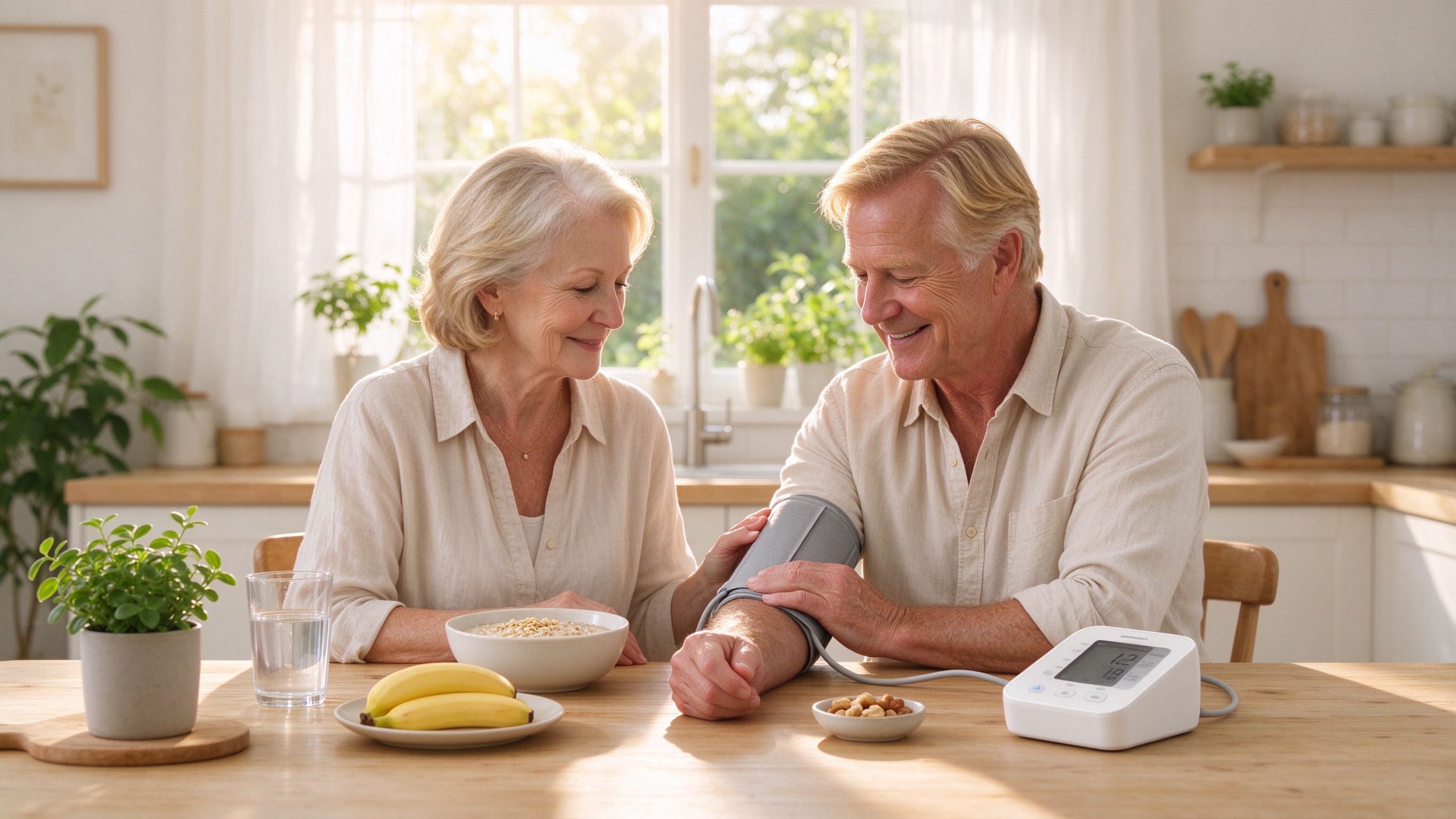
Checking your blood pressure is a small gift of peace of mind
According to health statistics, roughly four in ten people whose blood pressure runs high don’t know it. Many of us only think to check at an annual visit — which can delay the simple lifestyle changes that make day-to-day life easier.
Keep an upper-arm monitor at home and check regularly. Even when your daytime readings look fine, it’s worth paying attention to how you feel at night.
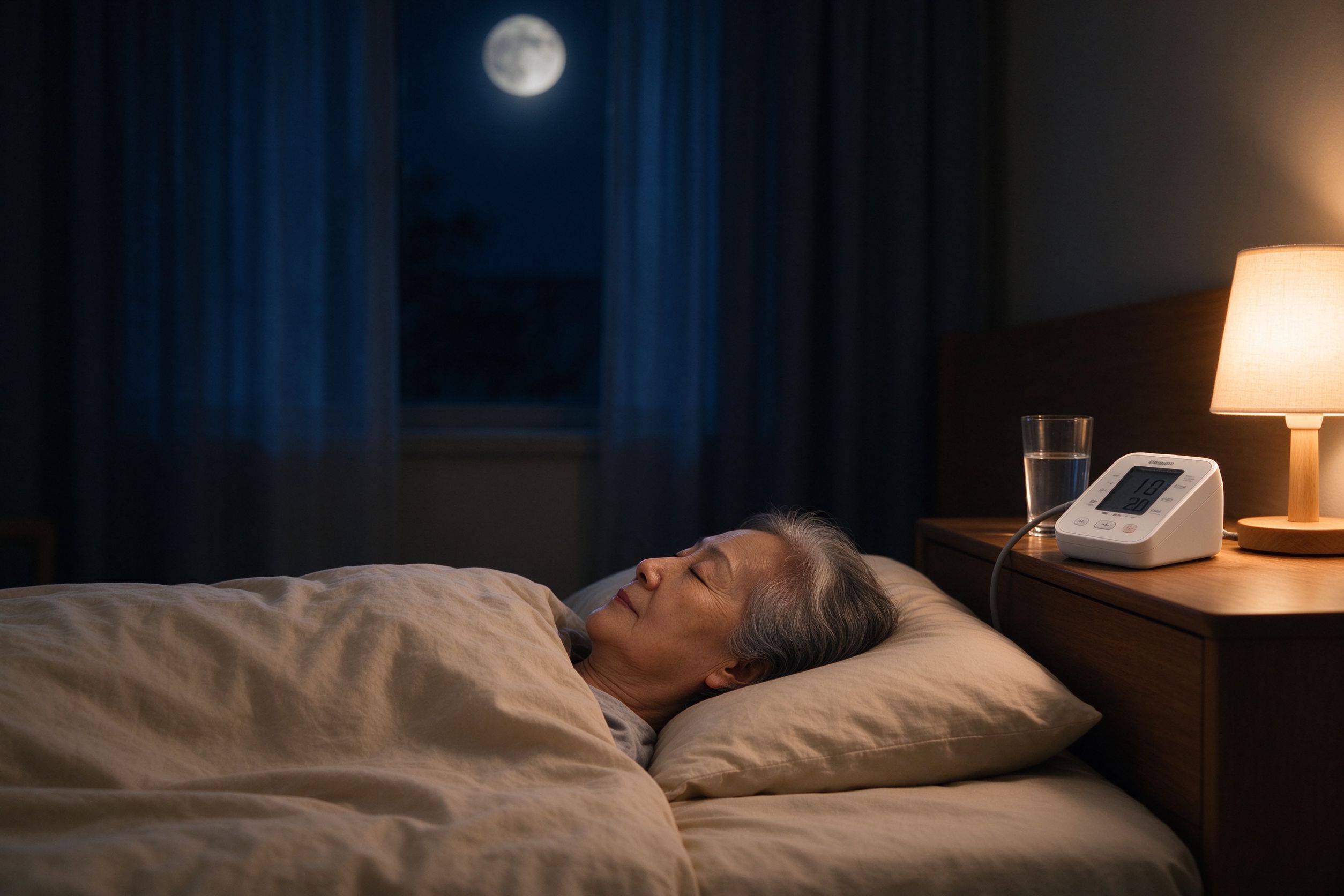
The Daily Rhythm
Blood pressure has its own daily rhythm
For most people, readings edge a little higher in the morning and afternoon, then ease down during sleep, reaching their lowest around 2–3 a.m. — active by day, resting by night.
Morning peak
Afternoon peak
Overnight low
As we get older, blood vessels naturally become less springy. For some people, readings don’t fall as expected overnight, so the body misses its quietest rest. Over time, an uneven rhythm adds extra strain — a few gentle habits help:
- Keep a regular sleep schedule, heading to bed early enough for a full night.
- Keep dinner light, and ease off strong tea and coffee late in the day.
- Measure regularly, jot down readings, and share them with your health professional.
Everyday Food Wellness
Gentle food wellness, in step with the season
Traditional food wellness is personal and seasonal. It’s about choosing everyday foods gently suited to how you feel right now — not expecting a single bite to change everything.
The beauty of simple kitchen foods is their balanced, easy-going nature, helping the body settle back into comfort, one meal at a time. The soups, teas and congee below use ordinary ingredients and fit naturally into a balanced daily diet.
A simple way to tune in? Notice how your head feels. When the body is tense, tired or out of balance, the head is often the first place to send a signal.
Four Everyday Patterns · Four Home Recipes
See which one feels closest to you
All four use everyday ingredients and simple steps. In traditional East Asian food wellness, patterns are described in gentle, nature-based names — the plain-language notes below make them easy to follow.
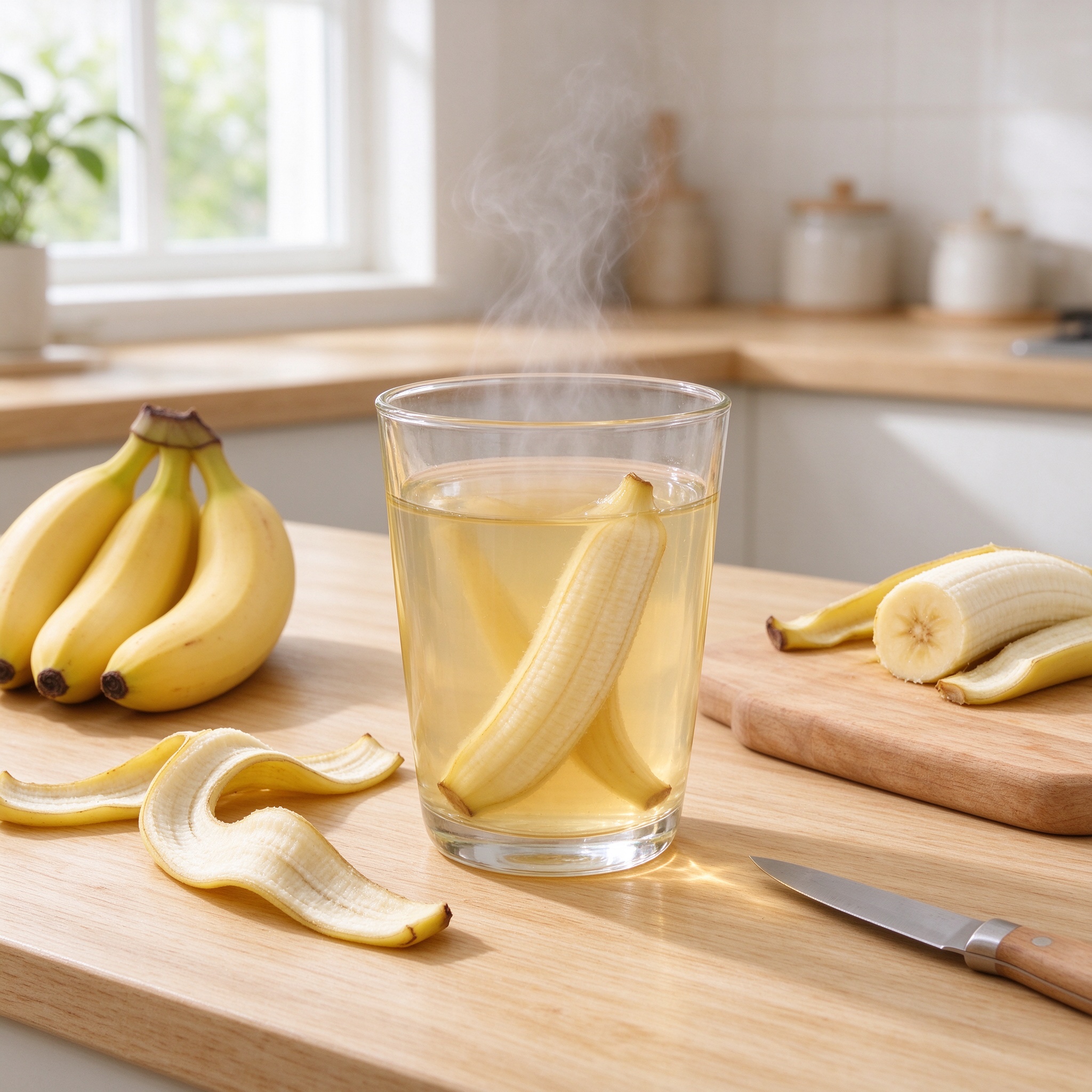
Rising Warmth pattern
Banana Peel Tea
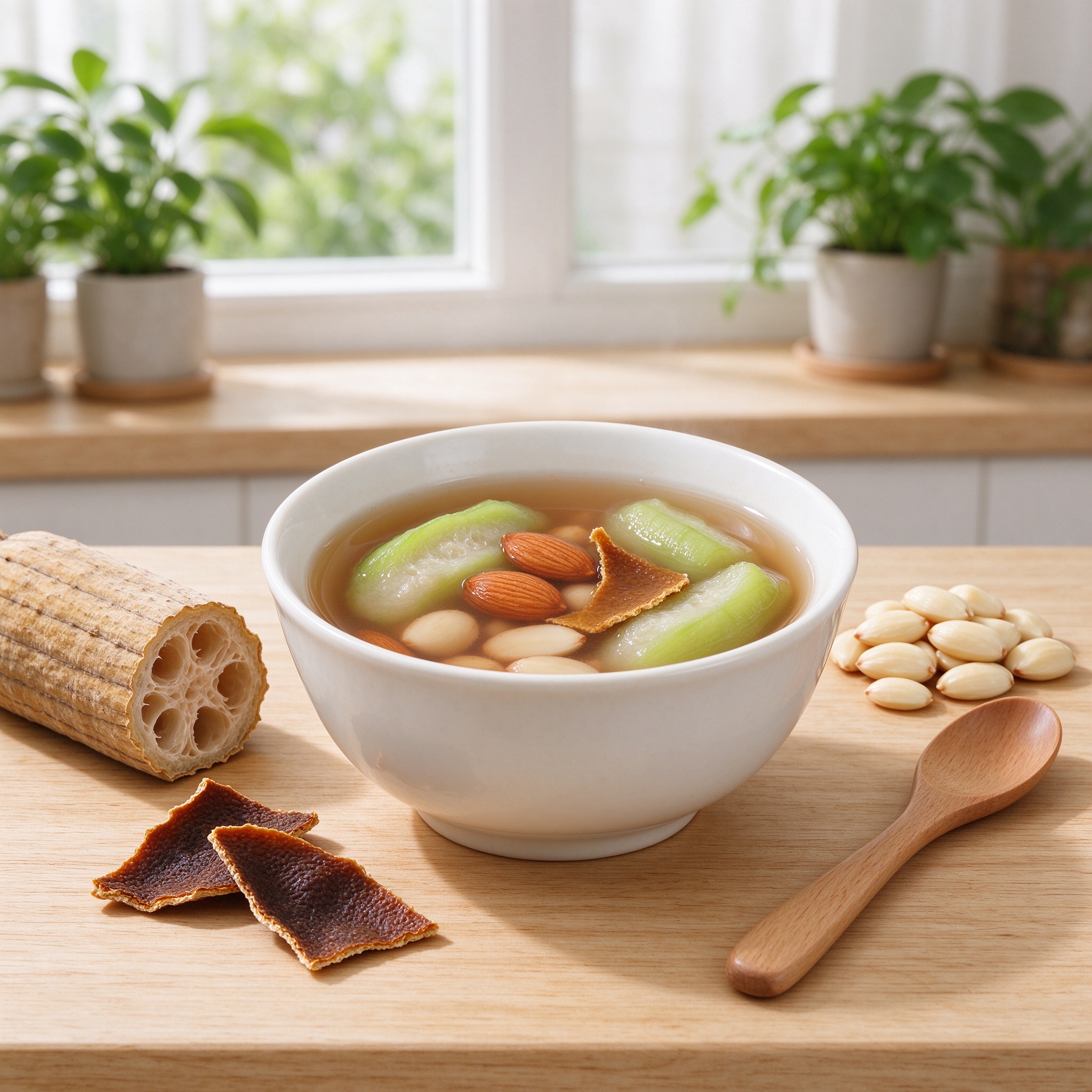
Damp-Heaviness pattern
Almond & Loofah Tea
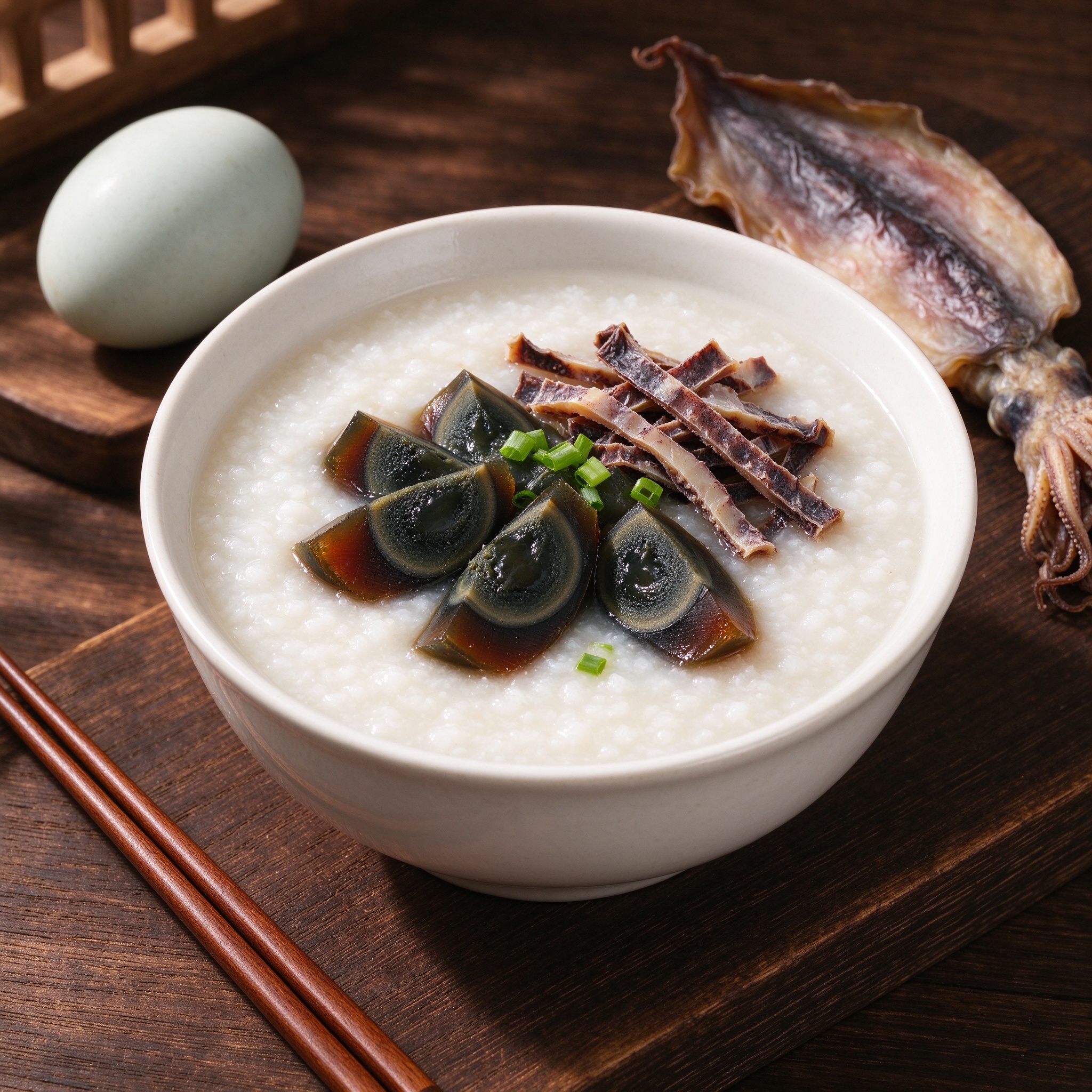
Depleted-Moisture pattern
Preserved Egg & Dried Cuttlefish Congee
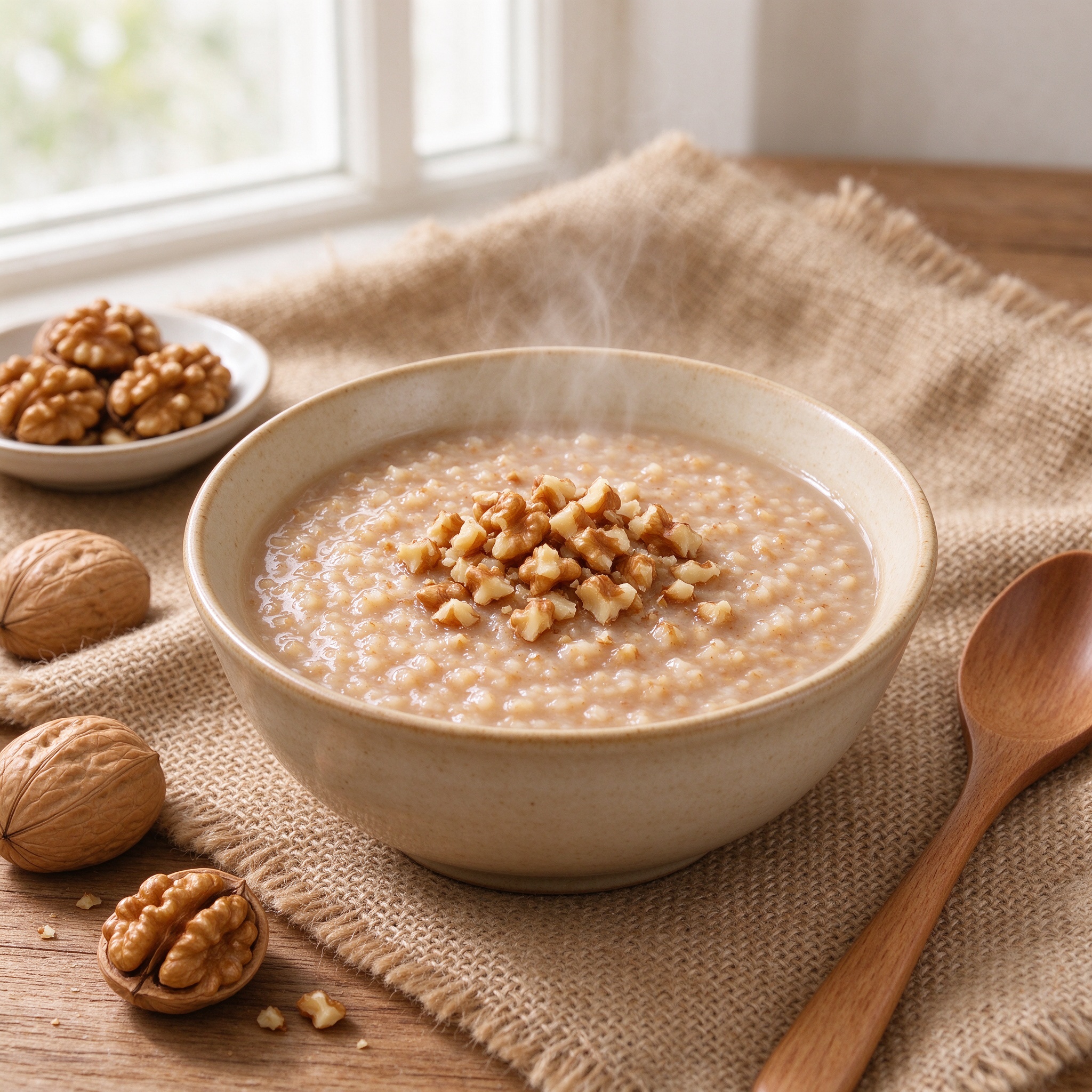
Dual-Depletion pattern
Walnut Congee
Daily Habits
What the body loves most is simple and consistent
Long-kept small habits, far more than occasional effort, are what help the body feel settled.
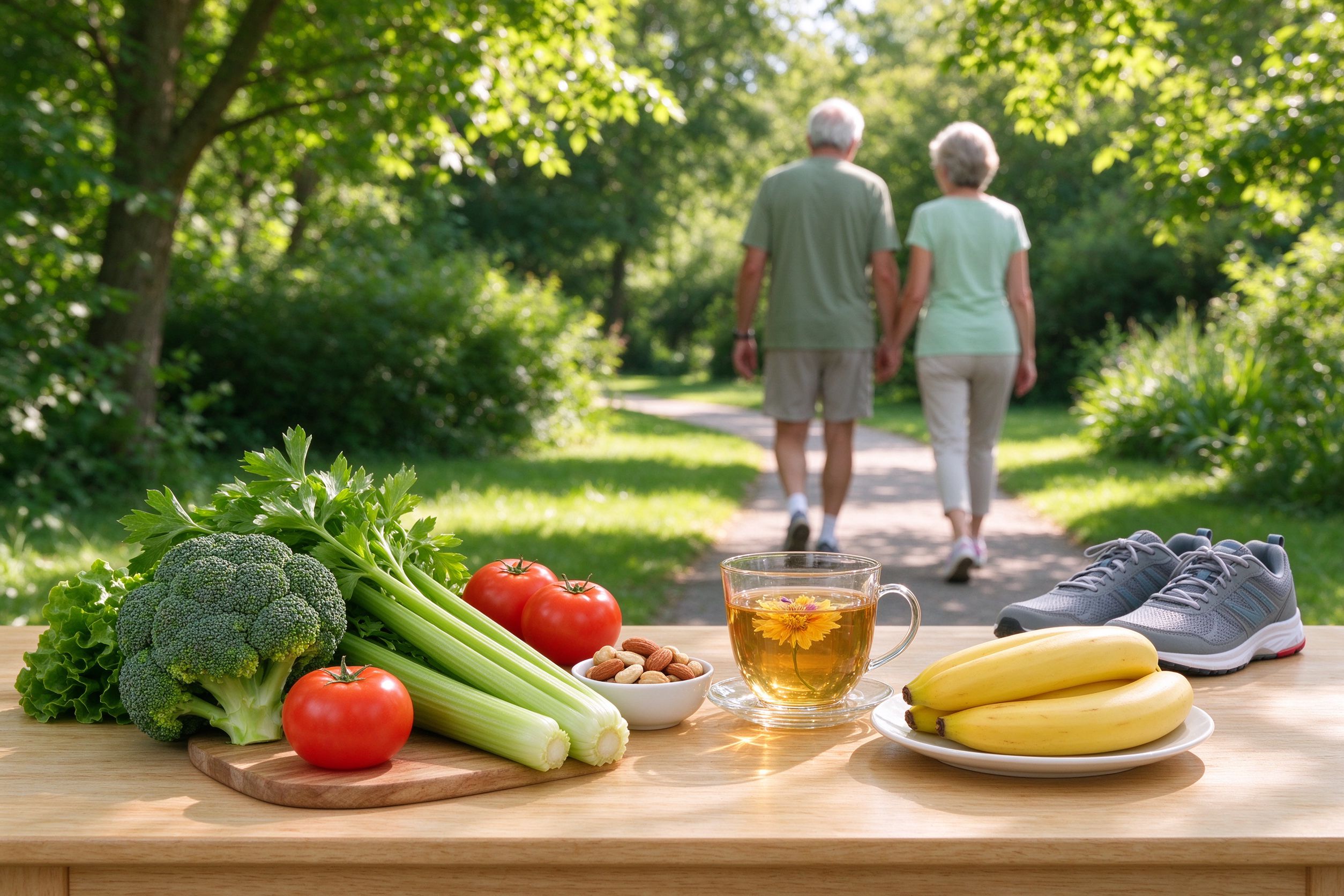
Measure regularly
Keep a home monitor, check regularly and jot down the readings.
Eat lightly
Less salt and oil; more vegetables, fruit, whole grains and beans.
Rest on rhythm
Early nights, a lighter dinner and proper overnight rest.
Move gently
After-dinner walks, a little sunlight — move daily, within your limits.
Every meal is a small act of care
Wellness isn’t found in one big moment — it lives in the daily rhythm of meals, sleep and gentle movement. May these simple kitchen recipes help you and your family feel a little more settled, day by day.